
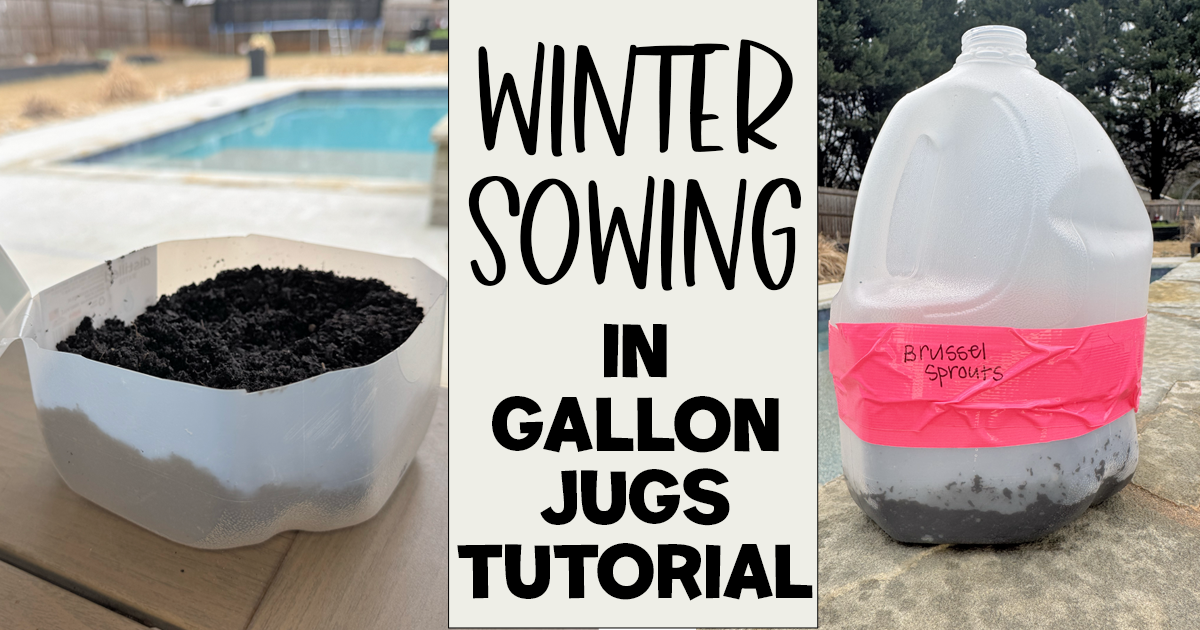
If you love gardening but hate waiting for spring, winter sowing is about to become your new favorite method. Winter sowing is an easy, low-maintenance way to start seeds outdoors during the cold months using recycled plastic jugs. It mimics nature by allowing seeds to experience winter temperatures before sprouting in spring—no grow lights or indoor seed trays required.
Best of all? It’s budget-friendly, eco-conscious, and perfect for busy gardeners.
This year, I’m making it a goal to spend as little money as possible on our garden. Our family is working toward a few financial goals, and while growing your own food can save money, it’s also very easy to spend far more than you plan. The less I spend upfront, the more our garden can truly save us in the long run. I know some expenses are unavoidable, but I’m committed to using as many money-saving methods as I can along the way.

What Is Winter Sowing?
Winter sowing is a method of planting seeds outdoors in mini greenhouses made from plastic containers—most commonly milk jugs. The seeds stay dormant during winter and germinate naturally when temperatures warm, producing hardy seedlings that don’t need hardening off.
This method works especially well for cold-tolerant flowers, vegetables, herbs, and native plants.
The water in our area has tasted awful for the past few months. It has something to do with the lake our water comes from. Officials say it’s safe to drink, but honestly, I don’t love the idea of my water tasting like Pine-Sol. (There’s not actually Pine-Sol in it—that’s just the best way I can describe the taste.) Because of that, I’ve been buying gallon jugs of water from the grocery store so I feel better about what we’re drinking. Instead of throwing the jugs away, I decided to save them and use them for this project. Look at me—gardening on a budget!
Supplies You’ll Need
- Clean plastic milk jugs or water jugs (translucent works best)
- Potting soil (not garden soil)
- Seeds – I love Baker Creek and Botanical Interests!
- Sharp scissors or craft knife
- Permanent marker
- Duct tape (optional)
- Water
Winter Sowing Seeds in Plastic Jugs – Step by Step
1. Prepare the Jug
Rinse your jug thoroughly. Using scissors or a knife, cut around the jug horizontally, leaving about an inch uncut under the handle to create a hinge.
2. Add Drainage Holes
Poke several holes in the bottom of the jug so excess water can drain.

3. Fill with Soil
Add 3–4 inches of damp potting soil to the bottom of the jug.
4. Plant the Seeds
Sprinkle seeds on top of the soil according to the seed packet’s spacing and depth recommendations. Gently press them into the soil.

5. Label Everything
Write the plant name and sowing date on the jug using a permanent marker. This step is crucial—you’ll forget what you planted!
6. Water and Close
Lightly water the soil, then close the jug and secure it with tape if needed.
7. Vent the Top
Remove the cap from the jug so air and moisture can circulate.
8. Place Outside
Set your jugs outside in a sunny spot where they’ll be exposed to rain, snow, and cold temperatures.
When to Start Winter Sowing
You can begin winter sowing anytime from December through February, depending on your climate. The colder your winter, the better this method works.
Unfortunately, I don’t live in a super cold area—North Georgia, to be exact. We get short cold spells and occasionally a light dusting of snow, but overall our winters are pretty mild. We’ll see how this method works here!
Best Seeds for Winter Sowing
Not all seeds are suitable for winter sowing. Choose plants that can tolerate cold or require cold stratification.
Flowers That Work Well
- Black-eyed Susan
- Coneflower (Echinacea)
- Poppies
- Snapdragons
- Sweet peas
- Larkspur
- Bachelor’s buttons
- Lupine
- Calendula
Vegetables to Winter Sow
- Lettuce
- Spinach
- Kale
- Swiss chard
- Broccoli
- Cabbage
- Brussels sprouts
- Peas
- Carrots
- Beets
Herbs That Do Well
- Parsley
- Cilantro
- Dill
- Chives
- Thyme
- Oregano
- Sage
Native Plants & Perennials
- Milkweed
- Lavender
- Columbine
- Yarrow
- Shasta daisy
- Coreopsis
When Will Seeds Germinate?
Seeds won’t sprout right away—and that’s okay. They’ll germinate naturally when the temperature and daylight are right for that plant, usually in early to mid-spring.
Do Winter-Sown Seedlings Need Hardening Off?
No! One of the biggest benefits of winter sowing is that seedlings are already acclimated to outdoor conditions, making them stronger and more resilient than indoor-started plants.
Tips for Winter Sowing Success
- Don’t overwater—nature will handle most of it.
- Keep jugs secured so wind doesn’t knock them over.
- Check moisture levels during long dry spells.
- Open the jug more in spring if temperatures rise quickly.
Final Thoughts
Winter sowing in plastic jugs is one of the simplest and most rewarding ways to start seeds. It saves money, reduces waste, and produces hardy plants that thrive in your garden. Whether you’re growing vegetables, flowers, or native plants, this method is perfect for gardeners of all experience levels.
If you’re ready to garden smarter—not harder—give winter sowing a try this season.
You can learn how to make your own DIY Greenhouse here!
